메트로人 머니 산업 IT·과학 정치&정책 생활경제 사회 에듀&JOB 기획연재 오피니언 라이프 CEO와칭 플러스
글로벌 메트로신문
로그인
회원가입

    머니

  • 증권
  • 은행
  • 보험
  • 카드
  • 부동산
  • 경제일반

    산업

  • 재계
  • 자동차
  • 전기전자
  • 물류항공
  • 산업일반

    IT·과학

  • 인터넷
  • 게임
  • 방송통신
  • IT·과학일반

    사회

  • 지방행정
  • 국제
  • 사회일반

    플러스

  • 한줄뉴스
  • 포토
  • 영상
  • 운세/사주
국제
기사사진
트럼프, 푸틴에 경고 "우크라 종전 거부시 추가 제재·관세 부과"

도널드 트럼프 미국 대통령이 블라디미르 푸틴 러시아 대통령을 상대로 우크라이나 종전 협상 거부시 추가 제재와 관세 부과를 경고했다. 22일(현지시간) 주요 외신 보도에 따르면 트럼프 대통령은 이날 자신의 소셜미디어 '트루스 소셜'을 통해 푸틴 대통령의 이름을 직접 거명하며 "우리가 '곧', '협상(deal)'을 하지 않는다면 러시아가 미국 및 기타 참여국에 판매하는 모든 것에 높은 수준의 세금과 관세, 제재를 가할 수밖에 없다"고 전했다. 이어 "우리는 쉬운 방법으로 할 수도 있고 어려운 방법으로 할 수도 있다. 하지만 쉬운 방법이 항상 더 낫다"며 "내가 대통령이었다면 결코 시작하지 않았을 이 전쟁을 끝내자. 이제는 협상을 할 시간이다. 더 이상 생명을 잃어선 안 된다"고 강조했다. 트럼프 대통령은 미국이 러시아와 우호적 관계란 점도 역설했다. 그는 "경제가 실패하고 있는 러시아와 푸틴 대통령에게 매우 큰 호의(FAVOR)를 베풀 것"이라며 "지금 당장 합의하고 이 터무니 없는 전쟁을 멈춰라. (아니면) 더욱 나빠질 뿐"이라고 전했다. 월스트리트저널(WSJ)에 따르면 트럼프 대통령은 키스 켈로그 러시아·우크라이나 특사에게 100일 내에 전쟁을 끝낼 것을 지시한 것으로 알려졌다. 평화 협상은 본인이 직접 주도할 계획인 것으로 알려졌다.

2025-01-23 09:18:41 원승일 기자
기사사진
Hyundai and Kia Expect Record High Performance Amid Popularity of Eco-friendly Cars and SUVs…Moving to Respond to U.S. and Chinese Markets This Year

Hyundai Motor and Kia are continuing their strong performance, fueled by the booming eco-friendly vehicle market. With each quarter setting new record-high results, industry attention is focused on whether Hyundai and Kia will achieve unprecedented performance in the previous year. According to industry sources on the 22nd, Hyundai Motor and Kia are set to announce their annual results for last year on the 23rd and 24th, respectively. According to financial information provider FN Guide, securities firms estimate Hyundai's annual results to be approximately 173 trillion KRW in revenue and 14.8 trillion KRW in operating profit. Kia is expected to report about 106.9 trillion KRW in revenue and 12.8 trillion KRW in operating profit. If these estimated figures materialize, Kia will set record-high results in both revenue and operating profit. For Hyundai, the company is expected to achieve its highest-ever revenue figures. In 2023, the combined revenue of the two companies reached 262.472 trillion KRW, with operating profit of 26.7348 trillion KRW, marking their best-ever performance. While the possibility of surpassing 30 trillion KRW in annual operating profit seemed likely through the first half of last year, it appears that, based on the estimates, only revenue records have been broken this year. The continued upward trend in Hyundai Motor and Kia's performance can be attributed to a favorable external environment, including the sustained high exchange rates, as well as a strategic focus on selling high-value vehicles such as eco-friendly cars and SUVs. In particular, strong export performance in North America played a key role in driving the companies' improved results. However, it remains uncertain whether this upward trend will continue into this year. This year, the launch of the Trump 2.0 administration has increased policy uncertainty, which has raised concerns about the companies' performance. Despite increasing investments, such as expanding local production bases in the U.S., Hyundai failed to meet the origin requirements for batteries and key minerals used in eco-friendly vehicles. As a result, Hyundai's Ioniq 5, Ioniq 9, and Genesis GV70 electric models were excluded from the U.S. electric vehicle subsidy program. On his first day in office, U.S. President Donald Trump signed an executive order directing the repeal of electric vehicle subsidies, calling them "unfair." The only models from Hyundai and Kia that qualify for the subsidy in the U.S. are the Kia EV6 and EV9. In response, Hyundai Motor Group is focusing all its efforts on meeting the requirements for U.S. electric vehicle subsidy eligibility. A Hyundai Motor Group official stated, "By the second quarter of this year, we will meet the parts origin requirements and be eligible for the subsidy again." Hyundai Motor and Kia are also focusing on targeting the Chinese market to expand their global sales. Hyundai Motor is preparing to launch a China-exclusive electric vehicle this year, aiming to expand sales in China, the world's largest electric vehicle market. Industry experts analyze that Hyundai's Chinese joint venture, Beijing Hyundai, will release a China-exclusive electric SUV model this year, with the price expected to be set around 20 million KRW. Kia has continued to see steady sales growth in China, leveraging its electric vehicle (EV) technology. From January to November last year, Kia's electric vehicle sales in China reached 5,526 units, a 26-fold increase compared to the same period the previous year. Hyundai Motor Group Chairman Euisun Chung emphasized at the company's New Year's meeting earlier this year, "Since things went well last year, we don't have the luxury of being optimistic about this year," adding, "Simply trying to endure won't be a good strategy." This underscores the importance of responding quickly and flexibly to changes in the global automotive market. ChatGPT를 사용하여 번역한 기사입니다.

2025-01-22 16:31:55 메트로신문 기자
기사사진
Starting the Preparation of Subordinate Regulations Amid Equity Controversy Between Domestic Companies and Global Big Tech

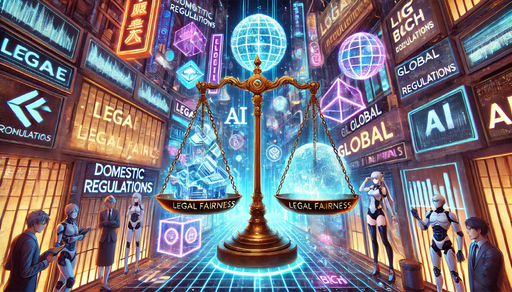
"The discussion surrounding the AI Basic Law, which passed the National Assembly in December last year and was approved at the Cabinet meeting this month, is actively ongoing. The AI Basic Law is a law designed to foster the development of South Korea's AI industry and protect the rights and dignity of its citizens." / DALL-E generated image. 4o mini There is a controversy surrounding the AI Basic Law, with claims of reverse discrimination. The argument is that in a situation where global big tech companies are skillfully avoiding domestic laws in platform services, regulatory measures might unfairly target only domestic companies. The government has stated, "If foreign companies are not subject to regulation, domestic companies will not be either." According to the IT industry on the 22nd, concerns about reverse discrimination against domestic companies have been growing since the process of drafting subordinate regulations for the Artificial Intelligence Basic Law (AI Basic Law) on AI development and trust-building began. The Ministry of Science and ICT launched a task force on the 15th to draft the subordinate regulations for the AI Basic Law, which is scheduled to be promulgated this month and fully implemented in January of next year. The AI Basic Law serves as the foundation for policy support to foster the development of the AI industry, while also aiming to protect the rights and dignity of citizens from the potential risks of AI technology. It is the second AI-related law to be enacted in the world. The Ministry of Science and ICT plans to expedite the task force's work, aiming to complete the drafting of the subordinate regulations by June, well ahead of the deadline of December next year. The AI Basic Law has been one of the key pieces of legislation strongly advocated by the IT industry for swift enactment and implementation. However, the controversy over reverse discrimination arose after the law was enacted because of concerns that if its various regulations are applied only to domestic AI companies, it could put them at a disadvantage in competition with global big tech companies. Industry insiders argue that, while the urgent need for legislation to secure AI technology sovereignty and long-term support policies is clear, they are skeptical about whether there are ways to regulate and sanction global big tech companies within the framework of domestic law. In the past, global big tech companies, citing their foreign status, have either been subject to minimal enforcement of domestic laws or used loopholes to avoid them, paying less taxes and evading legal responsibilities compared to domestic companies. An IT service platform representative, Mr. A, stated, "The AI Basic Law has achieved the outcome of mandating foreign operators to designate domestic agents." However, he also expressed concerns, saying, "Domestic companies are ultimately forced to develop and provide services under the AI Basic Law, but under the development regulations, foreign companies will likely remain unaffected. This raises questions about whether the law is fair and equitable." The AI Basic Law strengthens regulations on foreign AI companies, requiring global big tech companies that impact the domestic market to designate a domestic agent. This is to ensure that these companies provide the necessary support for implementing the government's safety and reliability measures. Failure to designate an agent will result in a fine. The government plans to implement the AI Basic Law with a focus on "promotion" at 70-80% and "regulation" at 20-30%, aiming to alleviate the concerns of the IT industry. On the 21st, Kim Kyung-man, the Director of AI-Based Policy at the Ministry of Science and ICT, who attended the seminar on "Analysis and Evaluation of the AI Basic Law and Future Tasks" co-hosted by Kim & Chang Law Firm and the Korea Data Law and Policy Association, stated, "Regulations under the AI Basic Law that do not apply to foreign companies will not be applied to domestic companies either." He further explained, "For issues such as overlapping regulations or confusion in policy governance that slow down the changes and implementation of the system, we plan to address these promptly through the National AI Commission to ensure that there are no difficulties in competing with foreign companies." Park Min-chul, a lawyer at Kim & Chang Law Firm, expressed concern, stating, "The AI Basic Law is still at a stage where it is difficult to predict what regulations will be in place, leading to fears that it could become the starting point for further regulations." He added, "The subordinate regulations should be clarified while avoiding the addition of unnecessary content, and should be used as a mechanism to increase predictability." ChatGPT를 사용하여 번역한 기사입니다.

2025-01-22 16:26:13 메트로신문 기자
기사사진
트럼프, AI 인프라에 720조 투자…오픈AI·오라클·소프트뱅크 합작"

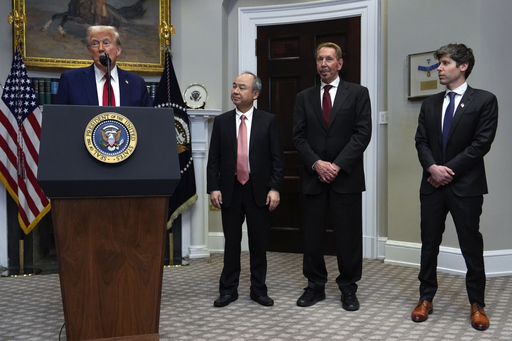
도널드 트럼프 미국 대통령이 오라클·오픈AI·소프트뱅크와 합작으로 인공지능(AI) 시설에 5000억 달러(약 720조원)를 투자한다고 발표했다. 트럼프 대통령은 21일(현지 시간) 백악관에서 기자회견을 열어 오라클, 오픈AI, 소프트뱅크가 참여하는 '스타게이트' 프로젝트를 통해 미국 AI 인프라에 5000억 달러를 투자할 계획이라고 밝혔다. 트럼프 대통령은 "차세대 AI 발전을 위한 물리적 및 가상 인프라를 구축할 것"이라며 "여기엔 데이터센터와 거대한 구조물 건설이 포함될 것"이라고 설명했다. 전국적으로 캠퍼스와 입지를 물색하고 있다며 "이번 프로젝트는 매우 크고 특별할 것"이라고 기대했다. 이를 통해 미국에 10만 개 넘는 일자리가 창출될 것이라고도 자신했다. AI 산업에서 중국이 주요 경쟁자라며 "우리가 원하는 건 이 나라에 AI를 유지하는 것"이라고 강조했다. 첫 번째 데이터센터는 텍사스에 건설된다. 각 1만4000여평 규모 건물이 현재 10채 건설 중으로, 20개 동까지 확대할 계획이다. 기자회견에는 샘 올트먼 오픈AI 최고경영자(CEO), 래리 엘리슨 오라클 CEO, 손정의 소프트뱅크 회장도 동석했다. 손 회장은 지난달 16일 플로리다 마러라고 리조트에서 트럼프 당시 당선인과 만나 1000억 달러 투자를 약속했었다. 다만 트럼프 대통령은 이번 프로젝트는 이전 투자 약속과 별개라고 말했다. 오픈AI는 이후 엑스(X, 옛 트위터)를 통해 이번 프로젝트가 "미국의 재산업화를 지원할 뿐만 아니라 미국과 동맹국의 국가 안보를 보호할 전략적 역량을 제공할 것"이라고 밝혔다.

2025-01-22 14:49:36 최규춘 기자
기사사진
"Short but Impactful" The Short-Form Drama Boom: China Leading, Will Korea Follow?

Short but impactful "short-form dramas" are changing the landscape of the global content market. In particular, as the short-form platform TikTok overcomes its survival crisis, attention is focused on whether the rapidly growing short-form drama market, primarily centered in China, will benefit from this trend. According to the "2024 China Short-Form Drama Industry Development White Paper" released by the China Internet Video Association on the 22nd, the size of China's short-form drama market reached approximately 50.44 billion yuan (about 10.037 trillion KRW) last year, showing a 35% growth compared to 2023. This surpasses the total size of China's film market in the same year, and it is expected to reach around 19 trillion KRW by 2027. ◆ AI and Localization Strategy: The Key to the Success of Chinese Short-Form Content China's leading short-form drama platform, "Lilshot," produces vertically formatted dramas with each episode lasting about one minute. This short, fast-paced format has become extremely popular among consumers who prefer quick and engaging content. Lilshot has especially gained attention in the U.S. market. In November of last year, it surpassed TikTok to become the most downloaded app in the U.S. with a total of 28.6 million downloads. In-app purchase revenue reached $80 million (approximately 105 billion KRW). Other Chinese short-form drama platforms, such as "DramaBox" and "GoodShot," continue to grow in the Chinese-speaking and Southeast Asian markets as well. The success of Chinese short-form dramas can be attributed to AI technology and localization strategies. AI technology has enabled high-quality content production while reducing costs and production time. Additionally, localized stories that reflect the cultural characteristics of each country, along with strategic partnerships, have accelerated their entry into the global market. Lilshot has attracted consumer interest with its reasonable pricing policy and a diverse range of content genres. Typically, a series consists of 70 to 80 episodes, with the first 58 episodes available for free. Subsequent episodes are offered for a fee, with the total viewing cost around $30 (approximately 40,000 KRW). The average production cost per series is only around $300,000 (approximately 400 million KRW), making it a highly profitable model. ◆ K-Content Takes on the Short-Form Market K-Content, which enjoys strong recognition in the global market, has also ventured into the short-form drama market. Since the launch of South Korea's first short-form drama platform, 'TopReels,' in April last year, 'BeagleU' and Watcha's 'ShotCha' have also actively entered the short-form market. TopReels is operated by Fox Media, a subsidiary of the game distributor NeoRidge, and offers not only original dramas such as "My Revenge Partner" and "Acquired Four Men" but also Chinese short-form dramas. BeagleU is the first domestic short-form platform to enter the Japanese market, offering around 90 dramas in seven languages, including English, Japanese, and Chinese. Recently, it gained recognition for its growth potential by securing an investment of approximately 120 billion KRW from Krafton. In particular, ShotCha has attracted attention as Watcha was the first domestic OTT platform to step into the short-form drama market. TVing is also preparing to enter the market by planning original short-form dramas. However, the lack of independent platforms and limited experience in large-scale production are seen as major obstacles in the Korean short-form market. An industry expert positively assessed the potential of short-form dramas as a new growth driver for the Korean content industry, emphasizing, "Strengthening production capabilities through global collaboration and adopting a content strategy that highlights the unique appeal of short-form dramas are essential." ChatGPT를 사용하여 번역한 기사입니다.

2025-01-22 14:05:44 메트로신문 기자
기사사진
Unpacked D-2, Key Points to Watch? Focus on the Smarter AI Phone and the Debut of XR Devices

IT tipster Evan Blass posted a photo on his social media, which is believed to be a promotional image of the Galaxy S25 series. / Evan Blass X 4o mini As the Galaxy Unpacked event approaches, attention is focused on the new products to be revealed. The upgraded 'Galaxy S25' series, featuring advanced artificial intelligence (AI) capabilities, is expected to be Samsung Electronics' flagship release. With this, Samsung aims to find a breakthrough in the smartphone market and gain a competitive edge. In addition, anticipation is rising for the unveiling of the second-generation 'Galaxy Ring' and Samsung's first mixed reality (XR) product, the 'Moohan' headset. According to industry sources on the 21st, Samsung Electronics will hold the "Samsung Galaxy Unpacked 2025" event on the 22nd (local time) in San Jose, USA, where the new Galaxy S25 series will be unveiled. The event will take place at 3 AM Korean time on the 23rd. The Unpacked event will be themed "The Next Big Leap in Mobile AI Experience," showcasing the new AI features that will be integrated into the Galaxy S25. The biggest features of the upcoming Galaxy S25 series are its redesigned look, significantly upgraded AI capabilities, and camera improvements. The lineup is expected to include the same models as the previous generation: ▲ Galaxy S25, ▲ Galaxy S25 Plus, and ▲ Galaxy S25 Ultra, with the addition of a new ▲ Galaxy S25 Slim model. Samsung Electronics has traditionally offered three models: the standard, Plus, and Ultra. However, in order to break through in the smartphone market, which is currently focused on thickness competition, Samsung has expanded its lineup by adding the "Slim" model. The biggest change is in the design. While the previous Galaxy S25 series featured sharp, angular corners, it is expected that the new series will adopt a more rounded design. Samsung hinted at this change in a recent video for the Galaxy S25 Unpacked invitation, showcasing the alignment of four smartphones, suggesting a shift in the design. The Galaxy S25 features a 6.2-inch Dynamic AMOLED 2X flat display and weighs 162g. The Galaxy S25 Plus, on the other hand, comes with a 6.7-inch display supporting a 120Hz refresh rate and WQHD resolution, with a weight of 190g. One of the key features of the upcoming Galaxy devices is the advanced AI capabilities and enhanced camera performance. Last month, Samsung introduced key features of its next-generation 'Galaxy AI,' including 'Nowva' and the 'Personal Data Engine.' 'Nowva' is a new notification system that displays the user's real-time activities, such as their schedule, music listening, translations, and health data, directly on the smartphone's lock screen. It is predicted that the voice assistant "Bixby" embedded in the Galaxy S25 will be integrated with Samsung's large language model (LLM) "Gauss" or Google's LLM "Gemini." While Bixby has previously been capable of only simple commands, combining it with an LLM model will enable it to perform more complex tasks. In addition, a "text conversion" feature, which transcribes call content into text, will be added. The scope of features such as text summarization and grammar and spelling checks, which were previously available on individual apps, is expected to expand across the entire device. These AI features will be enabled by Qualcomm's "Snapdragon 8 Elite," which will be integrated into all Galaxy models. The industry analyzes that this chip will see a 40% improvement in GPU performance and a 45% enhancement in AI capabilities compared to the previous generation, the Snapdragon 8 Gen 3. Additionally, Samsung is expected to unveil the upgraded second-generation Galaxy Ring. The new Galaxy Ring will include size options 14 (diameter 23mm) and 15 (diameter 23.8mm), bringing the total number of available sizes to 11. In addition, there is growing attention on whether Samsung will unveil its first XR (extended reality) product at this Unpacked event. Samsung has been developing an XR headset under the project codename "Moohan." While details on the headset's size, screen resolution, and other specifications remain unclear, it is expected to feature a Qualcomm Snapdragon chipset, as it has been developed in collaboration with Google and Qualcomm. Last month, Google revealed prototype images of the headset. While similar to Apple's Vision Pro, the key difference lies in its design, which includes large lenses and a headband for improved comfort during wear. Meanwhile, the price of Samsung's latest premium smartphone, the Galaxy S25 series, is expected to be similar to that of its predecessor. For the Galaxy S24, the prices were 1,155,000 KRW for the standard model, 1,353,000 KRW for the Plus, and 1,698,400 KRW for the Ultra. If predictions hold, the 256GB model of the Galaxy S25 is likely to be priced similarly. ChatGPT를 사용하여 번역한 기사입니다.

2025-01-21 16:33:25 메트로신문 기자
기사사진
[Trump's Blade] K-Industry at a Crossroads…Secondary Batteries and Steel 'Uncertain' vs. Shipbuilding and Power 'Bright'

President Donald Trump has begun his second term. As a result, the tariff hikes and protectionist policies that the Trump 2.0 administration had previously warned about are expected to impact the entire domestic industry. While some sectors are expressing concerns and tension due to the uncertainty surrounding Trump's return to power, there are also voices expecting potential benefits. According to industry sources on the 21st, with U.S. President Donald Trump officially inaugurated as the 47th president on the 20th (local time), domestic companies highly dependent on exports to the U.S. are facing heightened concerns. During his inauguration speech, President Trump had indicated trade policy reforms through the imposition of tariffs. Given this situation, there is widespread belief that domestic industries heavily reliant on the U.S. market will find it difficult to avoid the impact. ◆ Growing Tension in Secondary Battery and Steel Industries Amid Uncertainty in U.S. Exports The industry most focused on the Trump risk is the secondary battery sector. In his inaugural speech, President Trump stated, "We will end the Green New Deal and revoke the mandate for electric vehicles to revive the automotive industry and honor a sacred pledge to the great American auto workers." The Green New Deal refers to the Biden administration's policy for environmentally sustainable economic growth. Nevertheless, the industry believes that President Trump's statement about "ending the Green New Deal" does not necessarily imply the repeal of the U.S. IRA (Inflation Reduction Act). Repealing or modifying the IRA would not be possible through an executive order alone, and would require a process involving agreement and voting in both the House and Senate. Considering the differences in the number of seats in the House, analysts believe that such a move is unlikely to be realistic. Therefore, it is argued that assuming the repeal of the IRA based solely on the phrase "ending the Green New Deal" is an overstatement. However, a gradual reduction in electric vehicle subsidies is considered inevitable. There is increasing concern that this could negatively impact the profitability of domestic battery companies such as LG Energy Solution, Samsung SDI, and SK On, which have been increasing investments, including establishing local factories in the U.S. The Korea Institute for Industrial Economics and Trade predicts that battery exports could decline by 6.1% to 25.2% following the start of the Trump 2.0 administration. The steel industry is also closely monitoring the potential introduction of universal tariffs and carbon taxes. President Trump has made it clear that he intends to impose up to a 60% tariff on Chinese products, signaling his firm stance on containing China. The problem is that South Korean steel products, due to the carbon-intensive nature of the industry, will likely be affected by carbon taxes as well. Steel companies are expressing concerns about additional cost burdens and the potential weakening of export competitiveness. Currently, the U.S. applies a quota system to South Korean steel products. Under the Trump 1.0 administration, the quota system limited the amount of steel imported from South Korea, allowing domestic companies to benefit from duty-free access for 2.63 million tons of steel. However, if carbon taxes are applied to the limited export volume, the cost of the finished products would rise, making it difficult to maintain price competitiveness in the U.S. market. ◆ Shipbuilding and Power Industries Find 'Growth Drivers' in Trump's Re-election On the other hand, there are industries that are welcoming President Trump's re-election. Notably, the shipbuilding industry is expected to benefit from a double boost, with increased demand for eco-friendly ships and President Trump's cooperation requests further enhancing the outlook. In his inaugural speech, President Trump emphasized, "We will declare a national energy emergency and expand oil and natural gas drilling extensively." Additionally, in a phone call with President Yoon Suk-yeol in November 2024, he mentioned, "The U.S. shipbuilding industry needs South Korea's help and cooperation." Last month, President Trump also stated, "I am well aware of South Korea's world-class capabilities in building warships and vessels," adding, "I believe close cooperation with South Korea is necessary not only in ship exports but also in the areas of maintenance, repair, and servicing." Especially as President Trump places emphasis on traditional energy and fossil fuel-based industries, the demand for liquefied natural gas (LNG) and LPG carriers is expected to increase. Domestic shipbuilding companies such as HD Hyundai Shipbuilding & Marine Engineering, Hanwha Ocean, and Samsung Heavy Industries possess the technical capabilities to build around 80% of the world's LNG carriers, and are expected to strengthen their market position in the LNG carrier construction sector. Power equipment companies are also among the industries expecting to benefit from Trump's re-election. This is because President Trump's return to power has accelerated the replacement of power demand in the North American region. President Trump stated, "I will invoke emergency powers to secure the electricity needed for industrial development." Additionally, the day before his inauguration, President Trump stated, "I will use emergency powers to allow wealthy companies and individuals to build large factories and AI factories," and added, "We need twice as much energy, and perhaps even more." As the need for expanding the power grid grows, driven by the strengthening of the AI industry's foundation, U.S. power demand is rapidly increasing. In fact, the U.S. import value of power equipment rose significantly, from $164.34 million in January 2024 to $333.18 million in November of the same year. South Korea ranks as the second-largest importer, accounting for 12% of the total import value, and the overall trend is on the rise. Additionally, the increasing need for power equipment in the process of integrating renewable energy sources into the power grid is a positive factor for the industry. Furthermore, as the U.S. replaces its aging power infrastructure, there is rising demand for transformers, which is expected to benefit the power equipment sector. An industry insider stated, "The concerns over the tariff wars due to President Trump's re-election and the U.S.-China conflict are intertwined, meaning that the entire domestic industry will inevitably be significantly impacted." They continued, "In particular, in response to the changing global economic environment, domestic companies are adopting various strategies such as supply chain restructuring and expanding new businesses, but it is expected that, in the short term, it will be difficult to avoid overall confusion in the industry." ChatGPT를 사용하여 번역한 기사입니다.

2025-01-21 16:14:53 메트로신문 기자