메트로人 머니 산업 IT·과학 정치&정책 생활경제 사회 에듀&JOB 기획연재 오피니언 라이프 CEO와칭 플러스
글로벌 메트로신문
로그인
회원가입

    머니

  • 증권
  • 은행
  • 보험
  • 카드
  • 부동산
  • 경제일반

    산업

  • 재계
  • 자동차
  • 전기전자
  • 물류항공
  • 산업일반

    IT·과학

  • 인터넷
  • 게임
  • 방송통신
  • IT·과학일반

    사회

  • 지방행정
  • 국제
  • 사회일반

    플러스

  • 한줄뉴스
  • 포토
  • 영상
  • 운세/사주
국제
기사사진
Battery Material Industry Faces Growing Uncertainty, Actively Working on Countermeasures

The prevailing opinion is that the price of lithium, a key raw material for electric vehicle batteries, is unlikely to rise significantly this year. With the decline in raw material prices, there are increasing expectations that the outlook for battery material companies will also remain bleak. In response, battery material companies are focusing on strengthening their superior technology and stable supply capabilities to overcome the decline in profitability caused by falling mineral prices. According to Korea Resources Information Service (KOMIS) on the 13th, the price of lithium was 72 yuan per kilogram as of the 9th. Lithium prices began to decline in the fourth quarter of 2022 due to a slowdown in global electric vehicle demand. The price had risen to 581.5 yuan per kilogram in November 2022, but it has been falling due to supply oversupply from China and the electric vehicle demand stagnation period, known as the "electric vehicle chasm." There is growing concern that the inauguration of Donald Trump's second administration could put pressure on lithium prices. Since President-elect Trump is not particularly favorable toward electric vehicles, there are speculations that the recovery of the electric vehicle industry during his term may not be clear, which could impact the demand for lithium. As a result, securities analysts are predicting that domestic battery material companies such as EcoPro BM, L&F, and POSCO Future M will report poor results in the fourth quarter. The main cause is identified as the "lagging effect" due to falling raw material prices. The lagging effect refers to the situation where products made with expensive raw materials are sold at relatively lower prices. According to earnings estimates from financial information provider F&Guide, EcoPro BM is expected to record annual sales of 2.8692 trillion KRW and an operating loss of 38.9 billion KRW for the previous year. After posting a total of 10.6 billion KRW in profits in the first and second quarters of last year, EcoPro BM incurred an operating loss of 41.2 billion KRW in the third quarter. It is expected that the company will see a smaller loss in the fourth quarter, and an annual loss is anticipated to continue. L&F recorded a cumulative operating loss of 360.4 billion KRW for the first to third quarters, surpassing its expected annual operating loss of 220.1 billion KRW for 2023. The company is forecasted to incur an operating loss of 94.2 billion KRW in the fourth quarter. There is widespread consensus that POSCO Future M will also face losses. The company is expected to record an operating loss of 4 billion KRW in the fourth quarter. Battery material companies are actively seeking cost reduction measures, as price reductions in electric vehicles are considered a crucial factor for boosting sales volume. The strategy to secure operating profit margins ultimately points to the need for cost reduction through the diversification of raw material supply chains. Additionally, the industry plans to focus on reducing equipment investment and securing financial strength. This is seen as an effort to maintain stable management in an uncertain market environment. EcoPro aims to stabilize mineral prices by establishing an integrated production joint venture in Indonesia, a resource-rich country, in collaboration with China's GEM. The venture will cover the processes of refining, precursor production, and cathode materials. EcoPro BM is reportedly reducing its equipment investment scale from 15 trillion KRW to around 10 trillion KRW and postponing the completion schedule for its cathode material factory. POSCO Future M plans to focus on improving its financial structure by halting investments in joint ventures and selling some of its assets. Additionally, the industry sees resolving the uncertainty surrounding North American market policies as a key factor for long-term growth. The degree of recovery in EV demand and the potential for gradual recovery in raw material prices are considered prerequisites for long-term growth. An industry insider stated, "Battery material companies are undergoing restructuring through the withdrawal from lithium businesses and reduction of staff, but lithium prices are still on a downward trend." They added, "It is expected that battery material companies will generally record losses in the fourth quarter as well." He continued, "Nonetheless, there will be certain points within the electric vehicle battery value chain where downward rigidity exists." He added, "The potential of the electric vehicle market remains large, and once the current chasm is overcome, the market will grow and enter a maturation phase." ChatGPT를 사용하여 번역한 기사입니다.

2025-01-13 16:18:03 메트로신문 기자
기사사진
LA 산불로 24명 사망, 불길 거세…"사망자 더 늘어날 듯"

미국 캘리포니아주 로스앤젤레스(LA) 근교를 태우고 있는 대형 산불로 지금까지 사망자는 24명, 실종자는 16명으로 집계됐다. 이번주부터 강풍으로 불길을 잡는 데 난항이 예상돼 사망자는 더 늘어날 것으로 보인다. LA카운티 검시관실은 12일(현지시간) 오후 5시 기준 사망자가 24명으로 늘었다고 밝혔다. 이들 중 8명이 팰리세이즈, 16명이 이턴 산불로 사망한 것으로 파악됐다. 문제는 강풍이 이번 주 들어 다시 강해질 것으로 예고돼 불길이 더 거세질 수 있다는 점이다. CNN은 "잠시 잦아들었던 바람이 이번 주 다시 강해질 것으로 예상된다"며 "건조한 초목 상황과 함께 바람이 신규 또는 현재 진행 중인 화재의 확산과 변동성을 키울 것"이라고 보도했다. 당국은 일단 신속한 진화를 위해 수감자까지 동원한 것으로 알려졌다. CNN에 따르면 총 931명의 수감자가 산불 확산을 막기 위해 방화선 구축을 위한 벌목 및 가연성 물질 제거 등 작업에 투입됐다. 산불 진화 작업에 투입된 수감자의 경우 하루당 이틀의 복무일 감면 혜택을 받는다고 한다. 캘리포니아 교정 당국은 "비상 상황에서 생명과 자산을 지키려는 헌신적인 노력"이라고 설명했다. 당국에 따르면 LA 일대에서는 현재 10만5000명 상당의 주민에게 대피령이 내려졌다. 당국은 오는 16일께 대피 주민의 귀가 조치를 논의할 것으로 보인다.

2025-01-13 13:46:14 원승일 기자
기사사진
트럼프-푸틴 '정상회담' 임박…"우크라 전쟁, 조만간 통화부터"

도널드 트럼프 대통령 당선인과 블라디미르 푸틴 러시아 대통령이 우크라이나 전쟁 관련 논의를 위한 정상회담을 준비 중인 것으로 알려졌다. 마이크 왈츠 미국 차기 국가안보보좌관은 12일(현지시간) ABC 뉴스와의 회견에서 "오는 20일 취임하는 트럼프 차기 대통령과 푸틴 대통령이 수일 내지 수주일 내로 전화회담을 할 예정"이라고 말했다. 이번 발언은 트럼프 당선인이 지난 9일 푸틴 대통령과 정상회동을 추진하고 있다고 언급한 것을 좀더 구체적으로 확인한 것이란 관측이다. 왈츠 보좌관은 "상대방(러시아)과 어떤 형태든 관계와 대화가 없으면 협상에 들어갈 수 없다"며 "앞으로 수개월 안에 이를 틀림없이 확립하겠다"고 강조했다. 다만, 왈츠 보좌관은 정상회담의 구체적인 일정이나 회담 방식 등은 확정된 게 없다고 했다. 그는 "확실한 프레임워크를 정하지 않고 추진 중이지만 조만간 이뤄질 트럼프 차기 대통령과 푸틴 대통령 간 전화통화에서 한 걸음 더 진전이 있을 것"이라고 전했다. 트럼프 당선인과 푸틴 대통령의 정상회담 관련 언급에 러시아 크렘린궁 대변인 디미트리 페스코프는 "환영한다"는 입장이다. 페스코프 대변인은 "트럼프·푸틴 대면 회담에 어떤 조건도 붙이지 않고 있다"고 밝혔다. 그런 가운데, 스위스 정부는 트럼프·푸틴 정상회담을 자국에서 개최할 용의가 있다는 의사를 표명했다.

2025-01-13 09:29:17 원승일 기자
기사사진
젤렌스키, 김정은에 "북한군 포로 교환하자"…북한군 "여기 살고 싶어"

볼로디미르 젤렌스키 우크라이나 대통령이 생포한 북한군 2명과 자국군 포로를 교환 석방하자고 제안했다. 12일(현지시각) AFP 통신에 따르면 젤렌스키 대통령은 이날 SNS인 X를 통해 "우크라이나는 러시아에 포로로 잡힌 우리 전사들과 교환을 성사시킬 수 있으면 북한군 포로를 넘겨줄 용의가 있다"고 밝혔다. 이어 "우크라이나가 생포하는 북한군이 더욱 많아질 게 틀림없다"며 "북한으로 돌아가길 원하지 않는 포로에게는 다른 선택지가 있을 수 있고, 우크라이나 전쟁에 대한 진실을 한국어로 전파해 평화가 더욱 가까워지기를 바라는 북한인은 그런 기회를 얻게 될 것"이라고 강조했다. 젤렌스키 대통령의 포로 교환 제의는 우크라이나 정부가 러시아 쿠르스크 지역에서 전투에 투입됐다가 부상을 입은 북한군 2명을 생포했다고 발표한지 하루 만에 나왔다. 한국 국정원도 이날 우크라이나가 붙잡은 북한군 포로 2명에 대한 심문 과정에서 참여했다고 확인했다. 반면, 러시아와 북한은 북한군이 쿠르스크에 파병돼 우크라이나군과 전투를 벌이는 사실을 부인하고 있다. 젤렌스키 대통령은 "블라디미르 푸틴 대통령은 북한의 군사적 지원이 없으면 우크라이나와 전쟁을 계속할 수 없다"고 주장했다.

2025-01-13 09:07:25 원승일 기자
기사사진
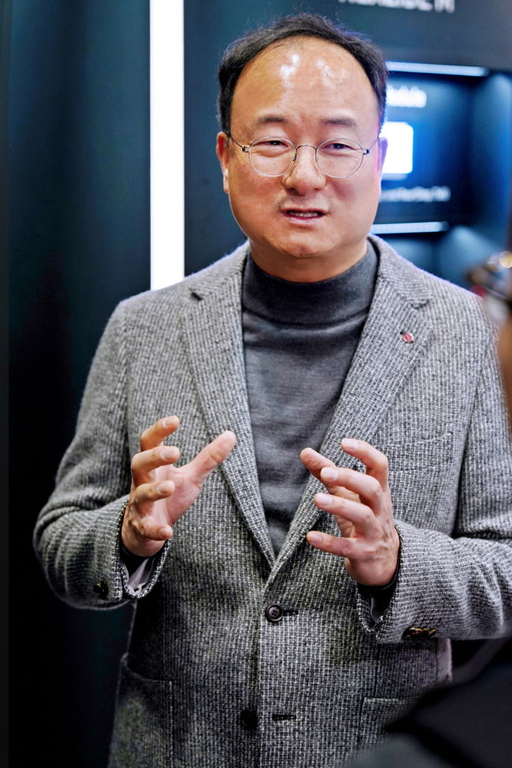
LG Innotek's Moon Hyuk-soo: "AI Semiconductor Substrates in Mass Production for U.S. Big Tech, Targeting Trillion-Won Revenue"

Moon Hyuk-soo, CEO of LG Innotek, announced that the company plans to cultivate the next-generation high-value semiconductor substrate business on a scale of trillions of KRW. He also expressed the intention to accelerate the discovery of new businesses such as mobility and robotics, based on the core technologies accumulated in the mobile sector. CEO Moon said during an interview with reporters at CES 2025, the world's largest IT and electronics exhibition, held at the LVCC in Las Vegas on January 8 (local time), "In December last year, we began mass production of FC-BGA for North American big tech companies at our Gumi 4 plant in Gyeongsangbuk-do." This is seen as a significant achievement, marking two years since the company announced its entry into the FC-BGA business in 2022. FC-BGA (Flip-Chip Ball Grid Array) is a next-generation substrate that allows AI semiconductor chips to be densely connected to the mainboard without wires. As the functionality of semiconductors increases, the substrates also grow larger, and FC-BGA is gaining attention as it can further enhance integration density, making it a promising new technology. According to Fujifilm Research Institute, the global FC-BGA market size is expected to grow more than twice, from $8 billion (11.69 trillion KRW) in 2022 to $16.4 billion (23.97 trillion KRW) by 2030. CEO Moon also mentioned, "We are actively pursuing development collaborations with several global big tech companies, in addition to North American big tech firms." He added that the company plans to actively explore external collaboration options, such as equity investments or mergers and acquisitions (M&A), to accelerate market penetration for the FC-BGA business. At CES 2025, LG Innotek plans to foster the semiconductor component market as a key player by leading with FC-BGA, alongside the automotive AP module that was unveiled for the first time. The company aims to develop this business into a trillion-won scale. LG Innotek announced through its corporate value enhancement (value-up) plan disclosed in November last year that it aims to grow the revenue from its new businesses to over 8 trillion KRW by 2030. CEO Moon also mentioned the "glass substrate," which is advantageous for implementing fine circuits, stating, "We are now making investments in equipment," and added, "Starting at the end of this year, we will begin full-scale pilot production (prototype mass production) of glass substrates." Glass substrates can replace the plastic-based core (center) with glass, which helps minimize circuit distortion. CEO Moon stated, "(Glass substrates) are the direction we must go in, and many companies are currently weighing the timing for mass production." He added, "LG Innotek is also preparing to ensure we are not late to the game." LG Innotek is applying its core technologies, such as camera modules, sensing, control, and substrates, which it has developed in the mobile sector, to various industries including mobility and robotics. CEO Moon emphasized that, particularly in the rapidly growing humanoid sector in the era of generative AI, "LG Innotek is actively collaborating with leading companies in the humanoid field, leveraging its global leadership in camera technology." Regarding Jensen Huang, CEO of NVIDIA, appearing on stage with 14 humanoid robots at the keynote speech ahead of the CES opening on January 6, CEO Moon stated, "We are collaborating with more than half of the companies that had humanoids on stage at that time." CEO Moon also emphasized the importance of strategically managing global production sites and factory automation in the face of growing uncertainties surrounding U.S. trade policies and geopolitical tensions. He stated, "The key task right now is to make our Mexico factory competitive in order to target the U.S. market," and added, "Although it requires significant investment, we will quickly expand factory automation in the process to secure cost competitiveness." Regarding the competition from the Chinese camera module industry, he stated, "We will diversify production by using our Vietnam plant as a core base for manufacturing legacy camera module products for smartphones, while the domestic plant will focus on R&D, high-value-added camera modules, and optical components for new applications as a mother factory." ChatGPT를 사용하여 번역한 기사입니다.

2025-01-12 16:51:42 메트로 기자
기사사진
Refining Industry Sees Signs of Improvement in the Fourth Quarter After Overcoming 'Worst Quarter'... Refining Margins Recovering

The four major domestic refiners (SK Innovation, GS Caltex, S-Oil, and HD Hyundai Oilbank) have struggled with operational losses in the third quarter due to decreased product demand caused by the global economic slowdown. The combined operating loss for the four companies in the third quarter exceeded approximately 14 trillion KRW. However, with a rebound in refining margins in the fourth quarter, there are expectations for improved performance. According to industry sources on the 12th, the refining margin in Singapore for the last week of last year averaged $4.1 per barrel, reaching the breakeven point. This has led to the assessment that the worst period has passed. While the refining margin in the third quarter averaged $3.5 per barrel, falling short of the breakeven level of $4-$5 per barrel, there are signs of improvement moving forward. Additionally, the adjustment of refining facility utilization rates is seen as contributing to the recovery in refining margins. Furthermore, there are expectations in the industry that the supply-demand situation will improve somewhat, as the net increase in refining capacity this year is expected to be lower compared to last year, while the amount of closed capacity is expected to rise. International oil prices also showed stability in the fourth quarter with smaller fluctuations. West Texas Intermediate (WTI) fell below $70 in September, but as of the 10th, it had risen to $76.57. Dubai crude prices slightly decreased in December compared to September, but it is anticipated that the sharp rise in the won-dollar exchange rate during this period will lead to a positive inventory effect. There are also opinions suggesting that with the recovery of inventory valuation gains and the improvement in diesel and kerosene margins, spot refining margins will improve. The securities industry is also providing a positive outlook on the recovery of profitability for the four major refiners. S-Oil's fourth-quarter operating profit is expected to be approximately 178.9 billion KRW, a turnaround from the previous quarter's operating loss of 414.9 billion KRW. SK Innovation is forecasted to shift from a 3rd-quarter loss of 484.1 billion KRW to a small operating profit of 29.1 billion KRW in the fourth quarter. The sharp rise in the won-dollar exchange rate has had a short-term positive effect on inventory. While a rise in the exchange rate is typically a negative factor for the refining industry, which imports all of its crude oil, it has had a positive impact on the valuation of previously purchased crude oil inventories. However, from a long-term perspective, the sharp rise in the exchange rate is expected to be a burden on the industry. Due to the nature of payments being made in U.S. dollars, the industry is inevitably at a disadvantage as the exchange rate increases. The domestic refining industry imports more than 1 billion barrels of crude oil annually, and it is estimated that for every 10 won increase in the won-dollar exchange rate, the annual foreign exchange loss would increase by 100 billion KRW. The dominant view is that the recovery of global economic recession, which is the fundamental cause of declining oil demand, will be key to restoring profitability. While the improvement in fourth-quarter performance is seen as a short-term factor, analysts believe it is difficult to remain optimistic about the outlook for this year. The refining industry is focusing on accelerating new business ventures as a long-term strategy to overcome the recession. They plan to expand their non-refining business portfolio by focusing on sustainable aviation fuel (SAF), bio-based marine fuel, and immersion cooling, aiming to find new growth opportunities. An industry insider stated, "While there is a possibility of improved performance in the fourth quarter compared to the previous quarter, there are many factors that could act as variables in the long term, such as the inauguration of Trump's second administration and global economic uncertainties." They added, "We will closely monitor the market situation and prepare for potential fluctuations that may arise in the future." ChatGPT를 사용하여 번역한 기사입니다.

2025-01-12 14:44:14 메트로 기자
기사사진
China's Blitz Alert... All-Out Pressure on Materials, Electronics, and Automotive Sectors

Chinese companies are expanding their presence in the domestic market beyond low-cost consumer goods, venturing into advanced technology sectors such as smartphones, electric vehicles, and other industries. They are increasingly entering the Korean market, which is sensitive to trends, with products ranging from robot vacuum cleaners and smartphones to automobiles. Although this movement may not immediately impact domestic companies, there are concerns that it could have a long-term effect on the overall manufacturing and consumption ecosystem in the domestic industry. According to industry sources on the 12th, the technology gap between South Korea and China is only 0.3 years. This means that China could catch up to South Korean industrial technology in just a few months. In particular, Chinese companies have made significant progress by leveraging government support and abundant human resources, narrowing the gap with South Korean technology. With this momentum, they are intensifying their efforts to target the Korean market. Chinese companies, primarily in the electronics sector, are focusing on expanding their market share in South Korea. Once called the "mistake of the continent," Xiaomi has now established a local subsidiary in South Korea to introduce products and services tailored to the local market. Xiaomi recently established Xiaomi Technology Korea, with a strategy to accelerate its market penetration by setting up the subsidiary this year, building on its staff who had been managing distribution in Korea since 2016. Xiaomi has expanded its product range from smartphones to air purifiers, robot vacuum cleaners, smart bands, and more recently, electric vehicles. Robot vacuum company Roborock opened its second flagship store in South Korea on the 1st. As the market leader in robot vacuum cleaners in Korea, Roborock, a Chinese company, is building a premium brand image not only through its flagship stores but also by entering major department stores nationwide. In addition to its dominance in the domestic robot vacuum market, Roborock is now introducing washer-dryer products, putting pressure on major players like Samsung Electronics and LG Electronics. The automotive industry is also in an uncertain situation. The current scenario is quite different from seven years ago when Chinese Dongfeng Motor entered the domestic market with cost-effective models but eventually withdrew. Now, with advancements in electric vehicle and autonomous driving technologies, the global standing of Chinese automakers has significantly changed. BYD, which has formed a global electric vehicle duopoly with Tesla, has officially entered the South Korean market through BYD Korea starting in January this year. The company is currently building its sales network in Seoul, Gyeonggi, Incheon, Busan, Jeju, and other regions. This month, BYD plans to launch the mid-sized sedan 'Seal' and the compact SUV 'Atto 3.' These models are expected to be priced 5 million to 10 million KRW cheaper than domestic competitors, when factoring in an 8% tariff, sales incentives, and electric vehicle subsidies. BYD's cost-effectiveness is based on securing cost competitiveness through economies of scale and in-house production of batteries, making it difficult for other brands to easily follow suit, according to analysis. Additionally, Chinese electric vehicle brand Xpeng is also reported to be actively pursuing its entry into the South Korean market. The finished vehicle industry believes that if Chinese companies with advanced autonomous driving and battery technologies enter the South Korean market, the burden on domestic automakers will significantly increase. In particular, if these companies succeed in penetrating the domestic market, it is expected to directly impact the global electric vehicle sales of Hyundai and Kia. An industry insider expressed concern, stating, "In the past, Chinese companies targeted the domestic market by emphasizing price competitiveness, but now they are pressuring the market with products that also have strong technological capabilities." The insider added, "If we don't prepare for competition with Chinese companies, there is a high likelihood that we will lose our share of the domestic market." ChatGPT를 사용하여 번역한 기사입니다.

2025-01-12 14:17:47 메트로신문 기자
기사사진
WSJ "현대차, 트럼프 취임식에 100만달러 기부"…"정의선-트럼프 회동도 추진"

현대자동차가 오는 20일 치뤄지는 도널드 트럼프 미국 대통령 당선인의 취임식에 100만 달러(약 14억700만 원)를 기부한 것으로 알려졌다. 취임 후 정의선 현대차그룹 회장, 트럼프 당선인과의 백악관 회동도 추진 중인 것으로 전해졌다. 11일(현지 시각) 월스트리트저널(WSJ)에 따르면 현대차 관계자들이 지난해 11월 5일 미 대선 이후 트럼프 당선인 측근들과 연락을 해 왔고, 트럼프 당선인과의 비공개 면담을 희망하고 있다. WSJ은 트럼프 당선인 취임식에 무뇨스 사장과 장재훈 현대차 부회장 등이 참석할 가능성이 있다고 했다. WSJ은 "현대가 미국 (대통령) 취임식에 기부한 것은 현대차 역사상 처음 있는 일"이라고 보도했다. 현대차의 이번 기부는 다른 자동차 업체들의 기부에 동참한 것이란 분석이다. 제너럴모터스(GM), 포드자동차, 도요타자동차도 각각 100만 달러를 트럼프 당선인 취임식에 기부했다. WSJ는 또, 현대차가 트럼프 당선인 측 고문들과 관계 구축을 위해 공격적인 캠페인을 시작했다고 보도했다. 현대차는 트럼프 당선인 측근들에게 미국 일자리 창출자, 미 자동차 산업 지지자가 되기 위해 노력하고 있다고 전했다. 현대차는 트럼프 대통령 취임 전 그의 자택인 플로리다주 팜비치 마러라고 리조트에서, 취임 후에는 백악관에서 회동하는 방안을 추진 중이다. 회동에는 호세 무뇨스 현대차 사장, 정의선 현대차그룹 회장이 참석하는 방안이 논의되고 있다.

2025-01-12 10:02:25 원승일 기자