메트로人 머니 산업 IT·과학 정치&정책 생활경제 사회 에듀&JOB 기획연재 오피니언 라이프 CEO와칭 플러스
글로벌 메트로신문
로그인
회원가입

    머니

  • 증권
  • 은행
  • 보험
  • 카드
  • 부동산
  • 경제일반

    산업

  • 재계
  • 자동차
  • 전기전자
  • 물류항공
  • 산업일반

    IT·과학

  • 인터넷
  • 게임
  • 방송통신
  • IT·과학일반

    사회

  • 지방행정
  • 국제
  • 사회일반

    플러스

  • 한줄뉴스
  • 포토
  • 영상
  • 운세/사주
국제
기사사진
"Korean Industries Accelerate Response to U.S. Tariffs... Doubling Down on Localization Despite Export Decline"

Korea's Leading Exporters Relocate Production to Counter U.S. Tariffs Major Korean exporters are rapidly shifting their production bases to counter impending tariffs from the United States. Companies with significant export volumes to the U.S.—especially in the automobile and electronics sectors—are responding strategically by expanding local production and increasing output in countries like Mexico and Canada, where tariff exemptions under trade agreements are more likely. According to industry sources on the 22nd, Hyundai Motor is swiftly ramping up production at its Alabama plant (HMMA) and the Hyundai Motor Group Metaplant America (HMGMA) in Georgia. Combined production from these two plants in the first quarter reached 105,316 units. HMMA operated at 102.8% of capacity, exceeding its 88,100-unit threshold, while HMGMA operated at 54.7% of its 25,900-unit capacity. Kia is also increasing output at its plant in Mexico, which has an annual production capacity of nearly 400,000 units. Having produced 270,000 units last year, Kia could potentially boost production by 130,000 units this year. Kia is focusing on the Mexico plant because, under the United States-Mexico-Canada Agreement (USMCA), it can be exempt from tariffs on parts if the rules of origin are met. Additionally, Kia is expected to expand production of models such as the Sportage, Sorento, Telluride, EV6, and EV9 at its West Point plant in Georgia. The electronics industry is also stepping up local production to mitigate the effects of potential U.S. tariffs. During its Q1 earnings announcement, Samsung Electronics stated, “We are reviewing flexible and strategic utilization of our global manufacturing bases and sales hubs based on local conditions.” This suggests the company may shift production of some TVs and home appliances to minimize tariffs imposed since the Trump administration. However, Samsung faces the challenge of adjusting its production strategy quickly, especially since it currently relies heavily on Vietnam for smartphone production (60%), along with TVs and other appliances. LG Expands U.S. Washer and Dryer Production; Hyundai Motor–POSCO Forge U.S. Steel Alliance LG Electronics plans to expand its production of washers and dryers by shifting manufacturing to its plant in Tennessee. In its Q1 earnings call, LG stated, “For products from production bases expected to face high tariffs, we will secure optimal production locations based on our local network.” The company added, “We anticipate increasing U.S.-bound production to the high-10% range of total exports,” and noted that “for future expansion of U.S. production facilities, we are reviewing and comparing various scenarios to respond flexibly to policy changes in the U.S.” Meanwhile, rivals Hyundai Motor Group and POSCO Group are joining forces to strengthen their position in the U.S. steel market. On April 21, the two companies signed a Memorandum of Understanding (MOU) for comprehensive cooperation in steel and secondary battery materials. Through this partnership, POSCO Group is considering investing equity in Hyundai Motor Group’s electric arc furnace (EAF) steel mill project in Louisiana, as well as potentially handling direct sales of some of the plant's output. Hyundai Motor Group’s Louisiana steel mill, with a total investment of USD 5.8 billion, will be a vertically integrated facility specializing in automotive steel sheets—from raw materials to finished products. The mill is designed to produce high-quality products with lower carbon emissions compared to blast furnaces, and it is expected to have an annual output capacity of 2.7 million tons of hot-rolled and cold-rolled steel sheets. Hanwha Group is actively targeting the U.S. market, with Hanwha Qcells responding to local demand through its “Solar Hub,” the largest integrated solar production complex in North America. Hanwha Ocean is also focusing on U.S. expansion, having acquired the Philly Shipyard in Philadelphia last year for approximately USD 100 million. ChatGPT를 사용하여 번역한 기사입니다.

2025-05-22 16:31:56 메트로신문 기자
기사사진
"K-Power Equipment Running at Full Capacity... ₩20 Trillion Orders Drive U.S. Investment Expansion"

As Global Electricity Demand Surges, Korean Power Equipment Firms Enter Boom Cycle As global electricity demand surges, Korean power equipment manufacturers are experiencing a boom in orders. In particular, demand for key facilities such as ultra-high voltage transformers is rapidly increasing in the U.S. market. Despite tariff risks, Korean companies are accelerating local investment and expanding production facilities. According to industry sources on the 21st, the Korean power equipment industry has entered a super-cycle, with near full-capacity operation driven by rising sales in high-margin North America. HD Hyundai Electric’s average operating rate in Q1 reached 95.9%, while Hyosung Heavy Industries recorded an average of 94.19% for the same period. Order backlogs have also reached record highs. HD Hyundai Electric and Hyosung Heavy Industries have backlogs of KRW 9.51 trillion and KRW 10.83 trillion, respectively. Notably, U.S.-bound orders make up a significant portion, with North America accounting for 38% of HD Hyundai Electric’s Q1 sales and approximately 65% of its backlog. In line with growing power demand, companies are actively expanding investments in the U.S. The Federal Energy Regulatory Commission (FERC) projects that U.S. electricity demand growth will rise from 2.6% in 2023 to 4.7% by 2028. In 2023 alone, U.S. private utilities invested more than USD 170 billion in power generation and infrastructure—nearly double the level seen during previous CAPEX expansion periods. While tariff risks loom large, the ultra-high voltage transformer market remains supply-constrained, giving sellers strong pricing power. Many industry insiders believe that, even if tariffs materialize, the added costs can be partially passed on to buyers through higher sales prices. Indeed, the U.S. is experiencing a "shortage phenomenon," where supply falls short of soaring demand, intensifying the imbalance in the market. In response, Korean firms are working to establish local production systems in the U.S., making them less vulnerable to tariff policies. HD Hyundai Electric plans to invest KRW 185 billion to build a second plant in Alabama by 2027, aiming to manufacture 765kV-class ultra-high voltage transformers. Hyosung Heavy Industries is also considering expanding production at its Memphis plant from 130 to 250 units annually—almost doubling capacity. This comes just a year after investing KRW 70 billion to increase output to 160 units per year, indicating a swift response to rising local demand. Industry executives are also engaging in diplomatic efforts with U.S. policymakers to address tariff-related challenges and strengthen Korea-U.S. cooperation. Kim Young-ki, CEO of HD Hyundai Electric, is ramping up lobbying efforts in the U.S. In Q1, he spent approximately KRW 170 million through the U.S. law firm Squire Patton Boggs on lobbying related to "trade issues affecting power transformers and Korea-U.S. bilateral trade relations." Hyosung Chairman Cho Hyun-joon also attended the Cherry Blossom Summit in Washington, D.C. at the end of March, where he met with former Trump administration officials including Energy Secretary Chris Wright, HUD Secretary Scott Turner, and U.S. senators. His active engagement in informal diplomacy underscores the strategic importance of the U.S. market. BNK Securities researcher Lee Sang-hyun commented, "Although uncertainties related to tariffs and a potential slowdown in AI data center investment are rising, the industry has not yet felt a significant impact. With lead times stretching over four years and aging infrastructure needing replacement, coupled with growing electrification demand, the current boom cycle is likely to continue." ChatGPT를 사용하여 번역한 기사입니다.

2025-05-21 16:44:17 메트로신문 기자
기사사진
트럼프, 바이든 대신 해리스에 화살…"불법선거 수사 요구"

도널드 트럼프 미국 대통령은 지난 대선 경쟁자였던 카멀라 해리스 전 부통령이 유명인사들의 지지선언을 대가로 금품을 지불했다며 수사를 언급했다고 뉴시스가 전했다. 트럼프 대통령은 19일(현지 시간) 소셜미디어 트루스소셜에 "카멀라 해리스는 대선 운동 기간 브루스 스피링스틴의 부진한 활동에 얼마를 지불했나"라며 "그가 그렇게 해리스의 팬이라면 왜 그 돈을 받았을까. 이는 거액의 불법 선거 기부 아닌가"라고 적었다. 미국의 국민가수로 불리는 스프링스틴은 지난해 대선에서 해리스 전 부통령을 공개지지했는데, 이 과정에서 대가성 금품이 오갔다는 주장으로 보인다. 트럼프 대통령은 이어 "비욘세는 어떤가, 그리고 오프라(윈프리)에게는, 보노에게는 얼마가 갔을까"라며 "이 문제에 대한 대대적인 수사를 요구할 예정"이라고 밝혔다. 그는 "후보자들이 엔터테인먼트 비용을 지불하는 것으로 가장해 지지선언에 대한 대가를 지불하는 것은 허용되지 않는데, 카멀라가 그렇게 했다"고 주장했다. 해리스 전 부통령이 대선 당시 유세 규모를 늘리기 위해 불법적인 방법을 사용했다는 것이다. 트럼프 대통령은 또 다른 글에서 비욘세가 해리스 전 부통령 유세 무대에 올라 지지선언을 하는 대가로 1100만달러(약 152억9660만원)를 받았다는 언론 보도를 언급했다. 그러면서 "민주당과 카멀라는 목이 터져라 지지선언을 주는 것만으로 수백만달러를 불법 지급했다는 것을 기억하라"며 "이것은 최고 수준의 불법 선거 사기다. 브루스 스프링스틴과 오프라, 보노, 그리고 많은 이들이 설명해야할 것이 많다"고 적었다. 트럼프 대통령은 이들 중 특히 스프링스틴과 최근 대놓고 각을 세운 바 있다. 스프링스틴은 지난 14일 영국 맨체스터 공연에서 "미국은 지금 부패하고 무능하며 반역적인 정권의 손에 들어가 있다", "동맹국들을 버리고, 자유를 위해 싸우는 이들 대신 독재자 편에 서고 있다"는 등의 발언을 쏟아내며 트럼프 대통령을 직격했다. 이에 트럼프 대통령은 지난 16일 "쪼그라든 말린 자두 같은 로커(피부가 완전히 쪼그라들었어!)는 자기 나라로 돌아가기 전까진 입 좀 다물고 있어야 한다. 이게 바로 기본 예의다. 그 다음엔 어떻게 될지는 두고 보자"라고 반응했다. 그간 트럼프 대통령은 전임자인 조 바이든 전 대통령을 비난하는 것에 주력했는데, 해리스 전 부통령으로 화살을 돌린 점도 주목된다. 바이든 전 대통령 측은 전날 전립선암 진단을 받았다고 밝혔고, 이에 트럼프 대통령은 공격 대신 "빠르고 성공적인 회복을 기원한다"는 글을 남겼다.

2025-05-21 10:59:00 최규춘 기자
기사사진
"Leading the Era of Physical AI"… Government Launches 1 Trillion Won 'On-Device AI Semiconductor' Development Project

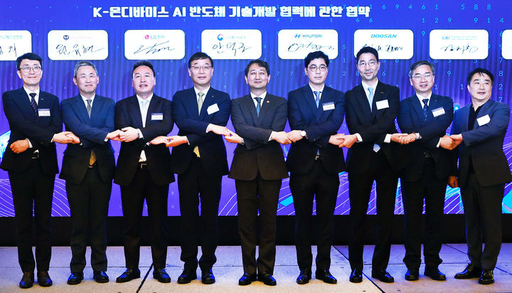
Government Launches 1 Trillion Won 'K-On-Device AI Semiconductor Technology Development' Project with Key Industries The government is launching a 1 trillion-won project to develop 'K-On-Device AI Semiconductor Technology,' partnering with semiconductor demand and supply companies across four key sectors: automotive, Internet of Things (IoT) and home appliances, machinery and robotics, and defense. On the 20th, the Ministry of Trade, Industry, and Energy (MOTIE) held an 'AI Semiconductor Collaboration Forum' at the Westin Chosun Hotel in Seoul, where they signed memorandums of understanding (MOUs) for technological cooperation with domestic fabless companies (semiconductor design firms) and demand companies. On-device AI semiconductors are next-generation chips that can be directly embedded in devices such as smartphones, cars, and robots, allowing them to perform AI computations without the need for connection to servers or the cloud. Their strengths include real-time computation, high security, low network dependency, and low power consumption. This project, which amounts to a total of 1 trillion won, is focused not only on the development of on-device AI semiconductors but also on related software, modules, and AI models. It aims to develop a full-stack solution and apply it to real-world industries through practical demonstrations. Demand companies, including Hyundai Motor, LG Electronics, Doosan Robotics, Daedong, and Korea Aerospace Industries (KAI), are participating from the planning phase of the project, forming a "dream team" with domestic fabless and software companies to collaborate on everything from technology development to mass production. The Ministry of Industry is currently fast-tracking procedures such as applying for exemption from preliminary feasibility studies. The goal is to start government funding as early as next year. Over the past six months, the Ministry has received 193 technology demands, carefully reviewing their industrial impact and competitiveness. Based on this, four priority sectors for support were selected, and six detailed development projects were identified. Specifically, these projects include: ▲AI chips for autonomous vehicles that can operate even in unstable communication environments ▲Smart home semiconductors that enable family-customized lighting and temperature/humidity control ▲Chips for humanoid robots that interact with humans ▲Defense semiconductors for unmanned aerial vehicles (UAVs) capable of autonomous decision-making and precise strikes without communication At the forum, fabless companies demonstrated their on-device AI semiconductor technologies under development and shared collaboration plans and business models with demand companies. After the technology development phase, the government plans to strengthen the supply chain and expand the industrial ecosystem through follow-up support, including standardization, certification, supply chain establishment, and domestic and international marketing. Minister of Industry Ahn Deok-geun stated, "Just as Intel ruled the PC era, Apple led the mobile era, and Nvidia dominated the generative AI era, we are now transitioning into the era of physical AI, where the market is waiting for a new leader." He emphasized, "The government will swiftly promote the 'K-On-Device AI Semiconductor' technology development project to ensure that South Korea can become a leader in the physical AI era." ChatGPT를 사용하여 번역한 기사입니다.

2025-05-20 16:49:22 메트로신문 기자
기사사진
Lotte Chemical Aims for Second Half Performance Rebound... Indonesia Plant Expected to Start Operations

Lotte Chemical Builds Optimism for Recovery After Three Years of Losses Lotte Chemical is growing more optimistic about a recovery in its performance, overcoming three consecutive years of losses. The company is making significant strides in improving profitability, thanks to ongoing cost-reduction efforts and the effects of restructuring. With asset sales and other measures to improve its financial structure, the potential for a shift to positive cash flow this year is becoming more likely. According to industry sources on the 19th, Lotte Chemical is expected to benefit from a decrease in naphtha prices starting in the second half of this year, which will ease its raw material costs. The naphtha price hit a low of $551 per ton on the 16th, marking the lowest level of the year. This represents an 18% drop compared to the average price of $673 per ton in January. Lotte Chemical operates naphtha cracker-based facilities, so it is highly sensitive to fluctuations in raw material prices. Given the high proportion of fixed costs in the petrochemical industry, the drop in naphtha prices is seen as a crucial factor that could reduce the company’s deficit. Some analysts predict that the impact of the naphtha price drop could be reflected with a delay due to the lagging effect of price adjustments and scheduled maintenance, which could temporarily increase the loss margin in the second quarter. However, many experts agree that product profitability is not expected to worsen. In addition, the effects of Lotte Chemical’s $5 billion investment in its Indonesia Line project are expected to take full effect starting next year. This large-scale investment, made amid declining profitability in the petrochemical industry due to oversupply from China, has been a focal point. The company has reduced its stake in the Indonesia project from 49% to 24%, easing its financial burden. Lotte Chemical is also managing its debt ratio, which has steadily improved, ensuring solid financial health. As of the first quarter, the company’s debt ratio stood at 71.53%, a slight decrease from 72.87% in the previous year. While this is still higher compared to 65.46% in 2023, the company has maintained a balanced debt-to-asset ratio, continuing to follow an optimal capital structure. Despite recording an operating loss of KRW 126.6 billion in the first quarter, marking its sixth consecutive quarter of losses, Lotte Chemical showed signs of improvement. The company reduced its loss margin compared to KRW 135.3 billion in operating loss for the same period last year, thanks to spread improvements, cost-saving measures, and favorable currency effects. Although it was difficult to avoid the effects of maintenance, which is expected to be completed by June 16, analysts anticipate that performance improvements will be seen after the second quarter. Lotte Chemical is also actively improving its financial structure and cash flow through an asset-light strategy. The company is restructuring low-efficiency businesses and selling non-core assets, including the closure of its synthetic rubber business in Malaysia and the sale of its high-purity terephthalic acid (PTA) subsidiary in Pakistan and all of its shares in Japan's Rezonac early this year. However, some analysts caution that oversupply issues in China and the Middle East could persist, and monitoring market trends in these regions will be important. There are also concerns that the improvement in profitability from the drop in naphtha prices may be temporary. Naphtha price volatility could increase depending on external factors, such as decisions made by OPEC and the recovery of global demand. Lee Yong-wook, a researcher at Hanwha Investment & Securities, stated, "The NCC spread is gradually improving, and Lotte Chemical’s loss margin is shrinking. However, the second quarter may see a slight temporary increase in losses due to maintenance impacts." He added, "The easing of U.S.-China tensions and China’s domestic stimulus policies are expected to positively impact the company. Through the sale of its Pakistan subsidiary and the liquidity of Rezonac shares, cash flow improvement and reduced interest expense burden are expected." ChatGPT를 사용하여 번역한 기사입니다.

2025-05-19 16:32:37 메트로신문 기자
기사사진
"AI, Gaming, and Camera – All in One"… Qualcomm Unveils 'Snapdragon 7 Gen 4'

Qualcomm Technologies announced on the 18th the release of its next-generation mobile platform, the Snapdragon 7 Gen 4 Mobile Platform, aimed at the mid-premium smartphone market. A Qualcomm spokesperson stated, "The Snapdragon 7 Gen 4 is the latest platform in the Snapdragon 7 series, designed to enhance the multimedia experience that users prefer and deliver overall powerful performance. Several global manufacturers are expected to adopt it." The new platform boasts significant improvements over its predecessor, including a 27% increase in central processing unit (CPU) performance, a 30% boost in graphics processing unit (GPU) rendering speed, and over a 65% enhancement in artificial intelligence (AI) performance. These improvements greatly enhance core user experiences such as photography, video recording, gaming, and AI-based functionalities. In particular, the platform features advanced image processing technology and the "Snapdragon Elite Gaming" function, providing immersive action game play and clear photographic performance. It also supports innovative features such as an on-device generative AI assistant and large language models (LLM). For the first time in the series, the platform includes a Stable Diffusion-based image generation feature, enabling users to easily create content on their mobile devices. Chris Patrick, Senior Vice President and Head of Qualcomm’s Mobile Handsets Division, stated, "We bring the user experience enabled by AI to the hardware level, making it easier for users to create and share content." ChatGPT를 사용하여 번역한 기사입니다.

2025-05-18 16:32:54 메트로신문 기자
기사사진
우크라·러, 휴전 협상 불발…포로 교환에는 합의

우크라이나-러시아 전쟁 발발 3년 2개월 만에 성사된 러시아와 우크라이나 사이의 협상이 90분 만에 종료됐다. 양국은 포로 일부 교환에는 합의했지만, 휴전 등 핵심 쟁점에서는 좀처럼 입장차를 좁히지 못했다. AFP 통신 등 외신에 따르면 지난 16일(현지시간) 오후 튀르키예 이스탄불 돌마바흐체 궁전에서 열린 러시아와 우크라이나 대표단 간 회담은 개최 90분만에 종료됐다. 이날 협상은 우크라이나 측에서는 루스템 우메로프 국방장관이, 러시아 측에서는 블라디미르 메딘스키 크렘린궁 보좌관이 대표로 참여 한 것으로 알려졌다. 중재역으로는 하칸 피단 튀르키예 외무장관이 참여했다. 피단 장관은 회담이 끝난 뒤 사회관계망 서비스 엑스(X, 옛 트위터)를 통해 "양측 대표단이 휴전을 목표로 하는 협상을 위해 다시 만나기로 원칙적으로 동의했다"면서 "신뢰 구축 차원에서 1000명씩 포로를 교환하기로 합의했다"라고 밝혔다. 이번 포로 교환이 예정대로 성사될 경우, 지난 2022년 2월 개전 이후 최대 규모의 포로 교환이 성사된다. 이날 회담에서는 휴전 및 우크라이나-러시아 간 정상회담 개최 여부가 집중 논의된 것으로 알려졌다. 다만 포로 교환에 관련된 내용은 양국의 소통이 단절된 동안에도 제3국의 중재를 통해 여러 차례 논의됐던 내용인 만큼, 이날 협상에서는 실질적 성과가 없었다는 게 주된 관측이다. 메딘스키 크렘린궁 보좌관은 회담 직후 "전반적으로는 회담 결과가 만족스러우며, 우리는 우크라이나와 연락을 지속할 준비가 됐다"며 "우크라이나 측이 정상 간 직접 대화를 요청했다"라고 발표했다. 우메로프 우크라이나 국방부 장관은 포로 교환 일정에 관해 "날짜는 이미 정해졌지만, 아직은 공개하지 않을 것"이라고 밝혔다. /안승진기자 asj1231@metroseoul.co.kr

2025-05-17 11:15:35 안승진 기자
기사사진
Hyundai Motor Establishes Middle East Strategic Base… Groundbreaking of Saudi Factory

Hyundai Motor Group Intensifies Its Push into the High-Potential Middle East Market Hyundai Motor Group is making a strong move to target the Middle East market, which is regarded as a land of endless growth potential. On the 14th (local time), Hyundai Motor held the groundbreaking ceremony for its first factory in Saudi Arabia at the site of the Hyundai Motor Saudi Manufacturing Company (HMMME) in the King Salman Automotive Industrial Park. The company announced the event on the 15th. HMMME is a joint venture in which Hyundai Motor holds a 30% stake, and the Saudi sovereign wealth fund holds 70%. The factory is set to produce a mix of electric and internal combustion engine vehicles, with an annual production capacity of 50,000 units, aiming to start operations in the fourth quarter of next year. Through this project, Hyundai plans to strengthen its mobility alliance with Saudi Arabia, which is focusing on growing its automotive industry as part of its Vision 2030, which aims for a future beyond oil. Jang Jae-hoon, Vice Chairman of Hyundai Motor Group, stated, "This groundbreaking ceremony marks the beginning of a new era for both Hyundai and Saudi Arabia. It will lay the foundation for opening a new chapter in future mobility and technological innovation." Yazed Al Humeid, Deputy Governor of the Saudi sovereign wealth fund, emphasized, "HMMME will be a key milestone in the development of the Saudi automotive industry. Through continued partnership with Hyundai, we will accelerate the growth of the mobility ecosystem." Saudi Arabia is a strategic core base for Hyundai's Middle East market efforts. Last year, Hyundai sold 135,878 units in Saudi Arabia, an 8.7% increase compared to the previous year (120,029 units). In the first quarter of this year, Hyundai sold 35,000 units, marking a 25% increase over the same period last year (28,000 units). As of the first quarter, Hyundai's market share in Saudi Arabia stood at 16.1%, ranking second after Toyota (26%), with Kia in third place (8.3%). Hyundai aims to sell 140,000 units in Saudi Arabia this year. Hyundai Motor Group Heightens Expectations for Middle East Market Growth There is increasing optimism regarding Hyundai Motor's push into the growing Middle East market. Last year, Hyundai sold 227,000 units in the region, a 2% increase compared to the previous year. In the first quarter of this year, Hyundai sold 60,000 units, marking a 10.1% increase compared to the same period last year. Hyundai, in collaboration with the Saudi Arabian sovereign wealth fund, plans to combine Hyundai's innovative manufacturing technologies with Saudi Arabia’s talent and infrastructure to establish the Hyundai Motor Saudi Manufacturing Company (HMMME) as a key hub to accelerate the growth and development of the Saudi mobility ecosystem. Vice Chairman Jang Jae-hoon stated, "We hope that HMMME will contribute to Saudi Arabia’s Vision 2030 by fostering local talent with mobility technology development capabilities." ChatGPT를 사용하여 번역한 기사입니다.
2025-05-15 16:40:34 메트로신문 기자
기사사진
"Beyond Smartphones, Into Automotive Electronics"… Samsung Electro-Mechanics and LG Innotek Compete in 'Differentiation' in Automotive Components

Samsung Electro-Mechanics and LG Innotek Expand into Automotive Electronics Market Samsung Electro-Mechanics and LG Innotek are shifting away from their smartphone and IT-centric business models and expanding into the automotive electronics (automotive electronics components) market to secure future growth engines. Both companies are focusing on gaining a competitive edge in the rapidly growing automotive electronics market with distinct strategies. According to market research firm Grand View Research on the 13th, the global automotive electronics market is projected to grow from approximately $262.6 billion in 2023 to $468 billion by 2030, with an annual growth rate of 8.6%. Samsung Electro-Mechanics Expands into Automotive Electronics with MLCC and Camera Modules Samsung Electro-Mechanics is expanding its core products, multilayer ceramic capacitors (MLCC) and camera modules, into the automotive electronics market. In particular, electric vehicles and those equipped with advanced driver-assistance systems (ADAS) use up to 10 times more MLCCs than regular vehicles, and the cost per unit is 2-3 times higher than for IT applications, making it a highly profitable segment. Currently, Samsung Electro-Mechanics holds a 13% share of the global automotive MLCC market, ranking third. The company is targeting $2 billion in automotive component sales this year. Recently, Samsung Electro-Mechanics began supplying automotive MLCCs to BYD, China’s largest electric vehicle manufacturer. Additionally, the company developed ultra-small, high-voltage MLCCs for use in LiDAR systems for autonomous vehicles and received the AEC-Q200 certification, a standard for automotive electronic component reliability. Samsung Electro-Mechanics is also making significant progress in transitioning its camera modules for automotive use. Last year, the company developed an all-season "weatherproof" camera module featuring water-repellent coating and lens heating technology. The modules are expected to be supplied to automakers, including Hyundai and Kia, by the end of the year. LG Innotek Focuses on Vehicle Sensing Solutions as Future Growth Engine, Expands into Advanced Modules In contrast, LG Innotek is positioning vehicle sensing solutions as its future growth engine, focusing on the development of integrated products such as LiDAR, automotive cameras, communication and lighting modules. Notably, the company plans to begin mass production of vehicle application processor (AP) modules in the second half of this year. The AP module is a core device that acts as the "brain" of various electronic systems inside vehicles. Despite its compact size of just 6.5 cm, it is a high-performance product containing more than 400 components. LG Innotek is also strengthening its patent competitiveness. Over the past five years, the company has filed more than 3,500 patents related to automotive electronics, with automotive electronics accounting for 40% of its total patents. Additionally, it holds eight international standard patents in the electric vehicle communication controller (EVCC) field. However, LG Innotek’s revenue share from automotive components is still relatively small. Last year, the automotive business generated KRW 1.94 trillion in sales, accounting for 9.2% of the total revenue, and in the first quarter of this year, sales decreased by 5% year-on-year to KRW 467.5 billion due to the slowdown in electric vehicle demand. Nevertheless, the company continues to show gradual growth, particularly in high-value products such as communications and lighting, and its order backlog has increased by 27% year-on-year to KRW 13.6 trillion, indicating ample growth potential. LG Innotek aims to achieve KRW 5 trillion in automotive sales and over KRW 2 trillion in sensing solutions by 2029. Industry experts analyze that while Samsung Electro-Mechanics has focused on securing immediate profitability, LG Innotek is prioritizing future growth. One industry insider explained, "Samsung Electro-Mechanics is expanding its existing strengths in MLCCs and camera modules into the automotive sector, generating stable revenue, while LG Innotek is investing in future technologies like sensing and integrated modules, focusing on securing long-term competitiveness." ChatGPT를 사용하여 번역한 기사입니다.

2025-05-14 16:36:17 메트로신문 기자